

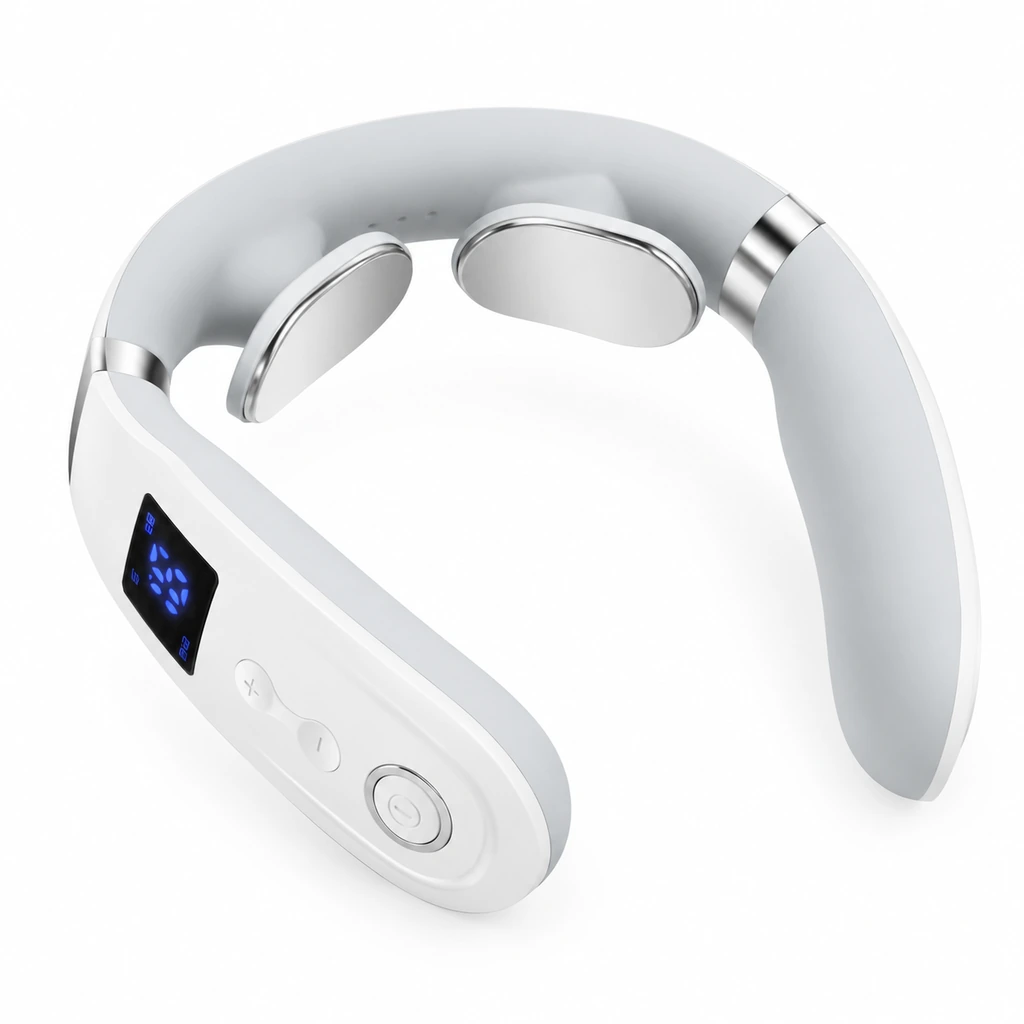
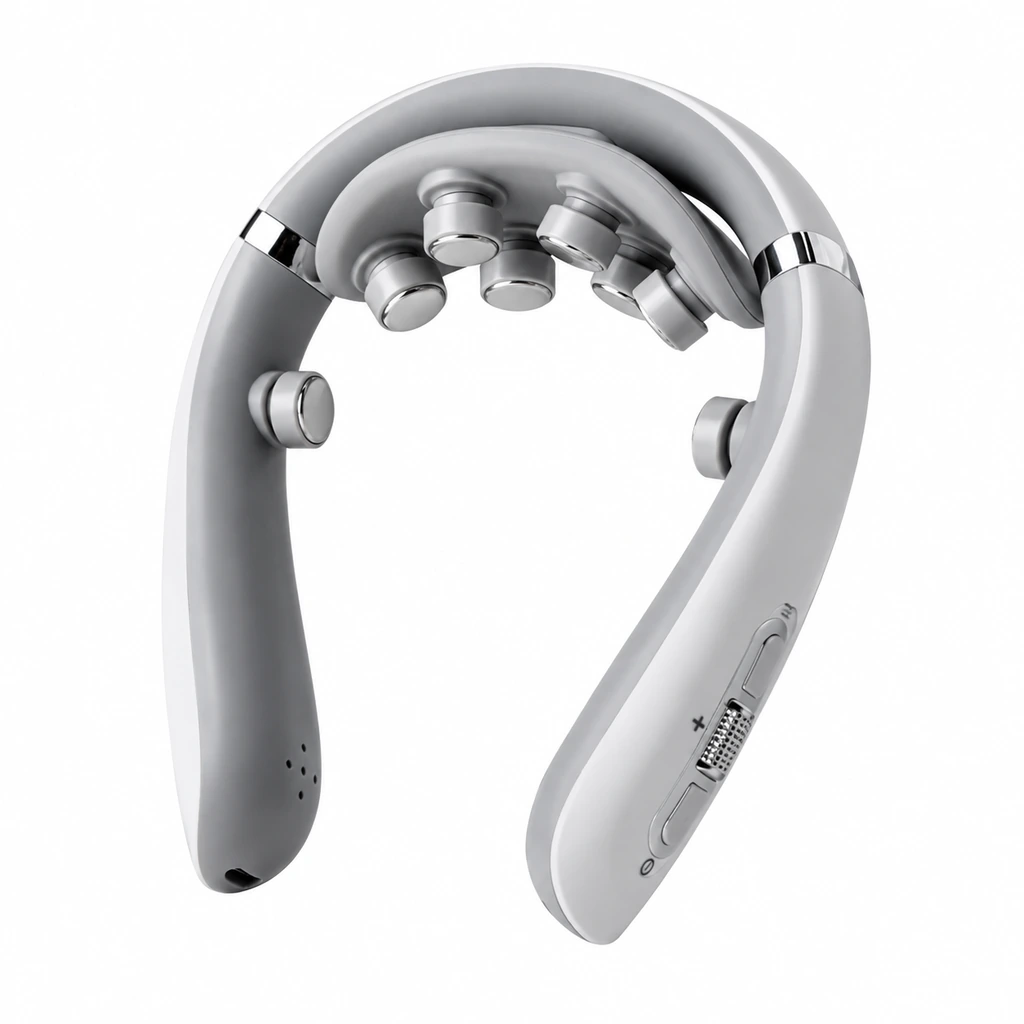
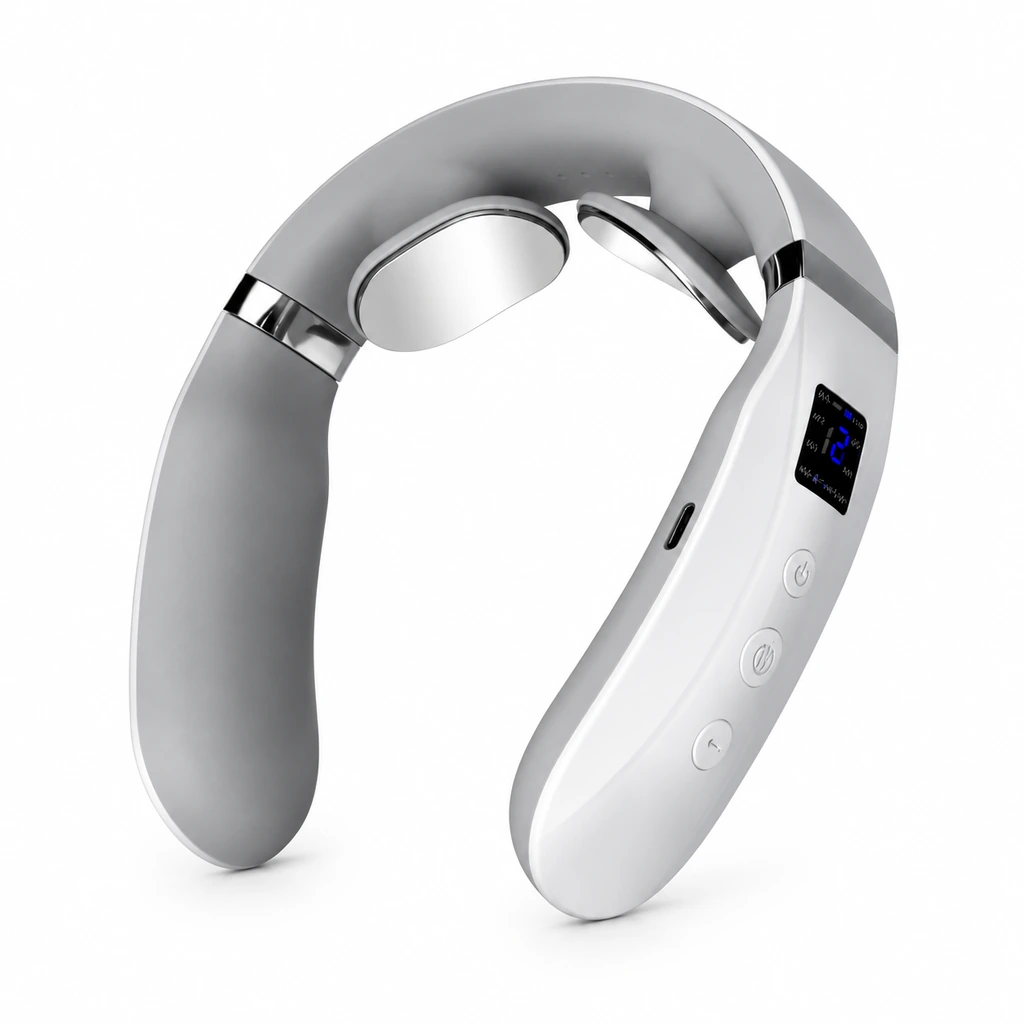
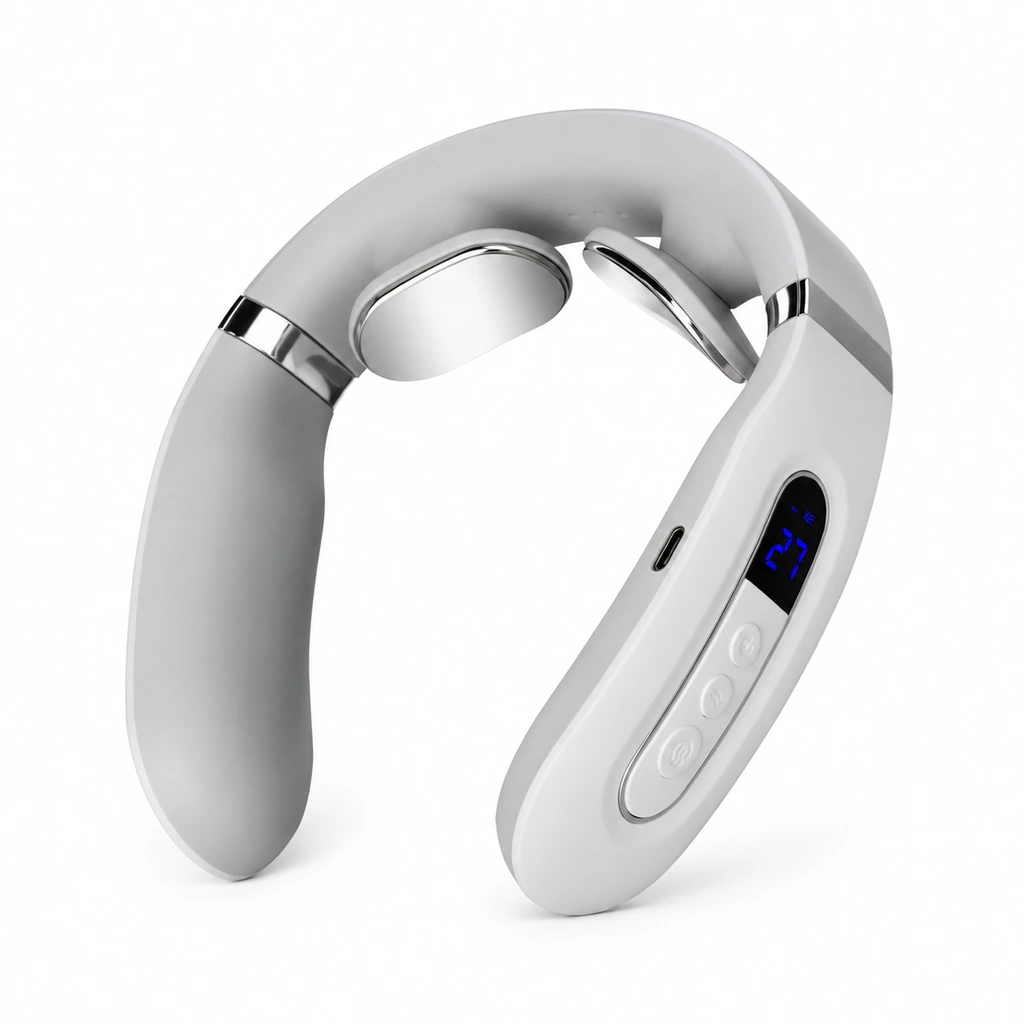


Waist Massager Belt Sizing
A buyer guide to measuring waist massager belt length, fastening overlap and wearable range on A1 or A9 samples before approving a size claim.
 Meilan Tech 7 min read
Waist massager belt sizing needs four separate answers: the size of the central unit, the belt's flat length, the positions where its fastener can engage, and the fit observed on a worn sample. An overall dimension is useful for packaging, but it cannot establish a wearable waist range. For an A1 or A9 sourcing decision, measure the quoted belt and record how securely the contact panel sits on the intended wearers.
1. Define the wearer and selling context
Start with the people and use setting behind the order. A brand planning an online listing needs a size description that customers can understand before purchase. A distributor running an in-store demonstration needs a belt that staff can adjust quickly without guessing where to fasten it. A gift program may need a broader practical adjustment range, but that range must still be shown by the chosen sample rather than assumed from a photograph.
Specify where the belt will sit on the body, whether it will be tried over light clothing, and which wearer measurements your channel needs to cover. Ask the supplier to identify the exact model, belt revision, strap material and fastening construction in the quotation. These choices affect fit more directly than a mode count or a general “one size” label.
2. Separate unit size, belt length and fit range
Three numbers are often confused. Central-unit dimensions describe the working panel and matter for body coverage and carton design. Flat belt length is the end-to-end length of an opened sample. Wearable range is the circumference at which the actual fastener still engages with adequate overlap and the panel stays in the intended position. Belt stretch, closure placement and the shape of the panel can make that last range different from the flat length.
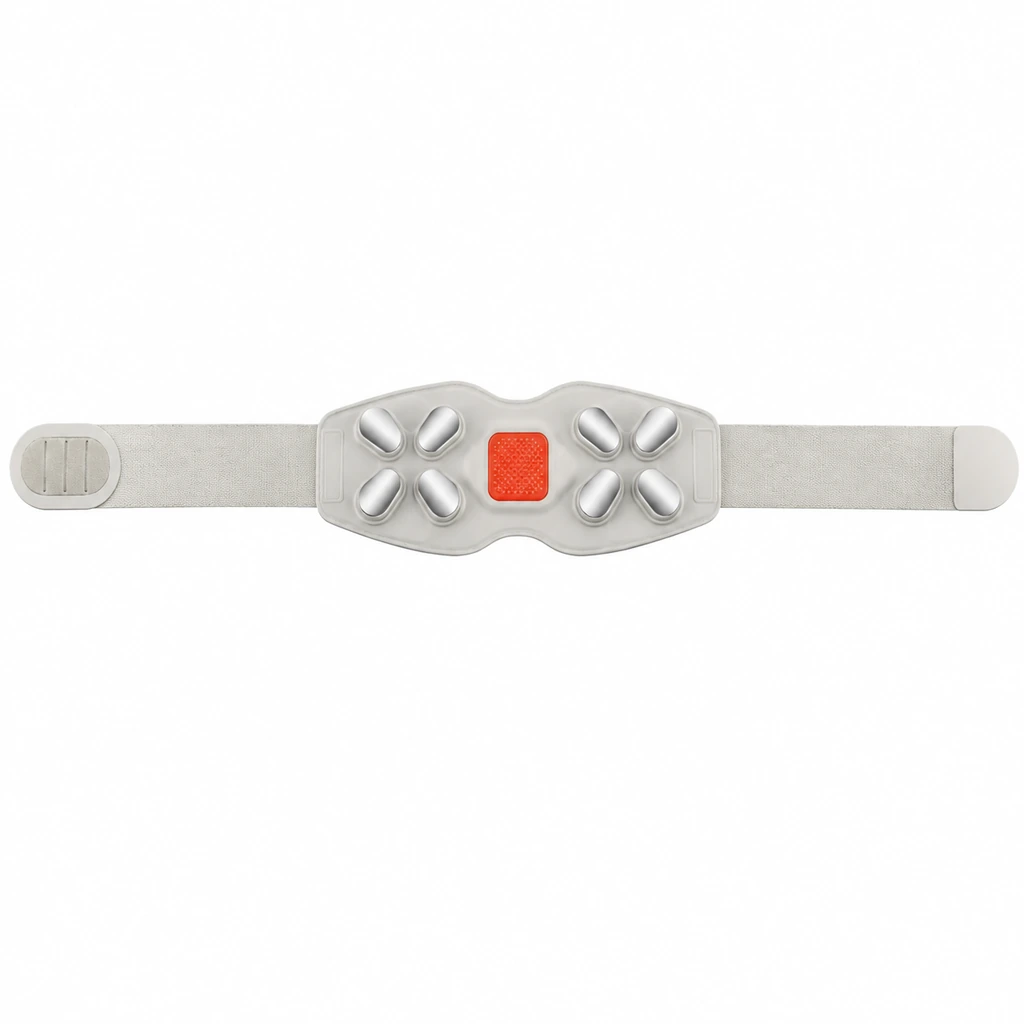
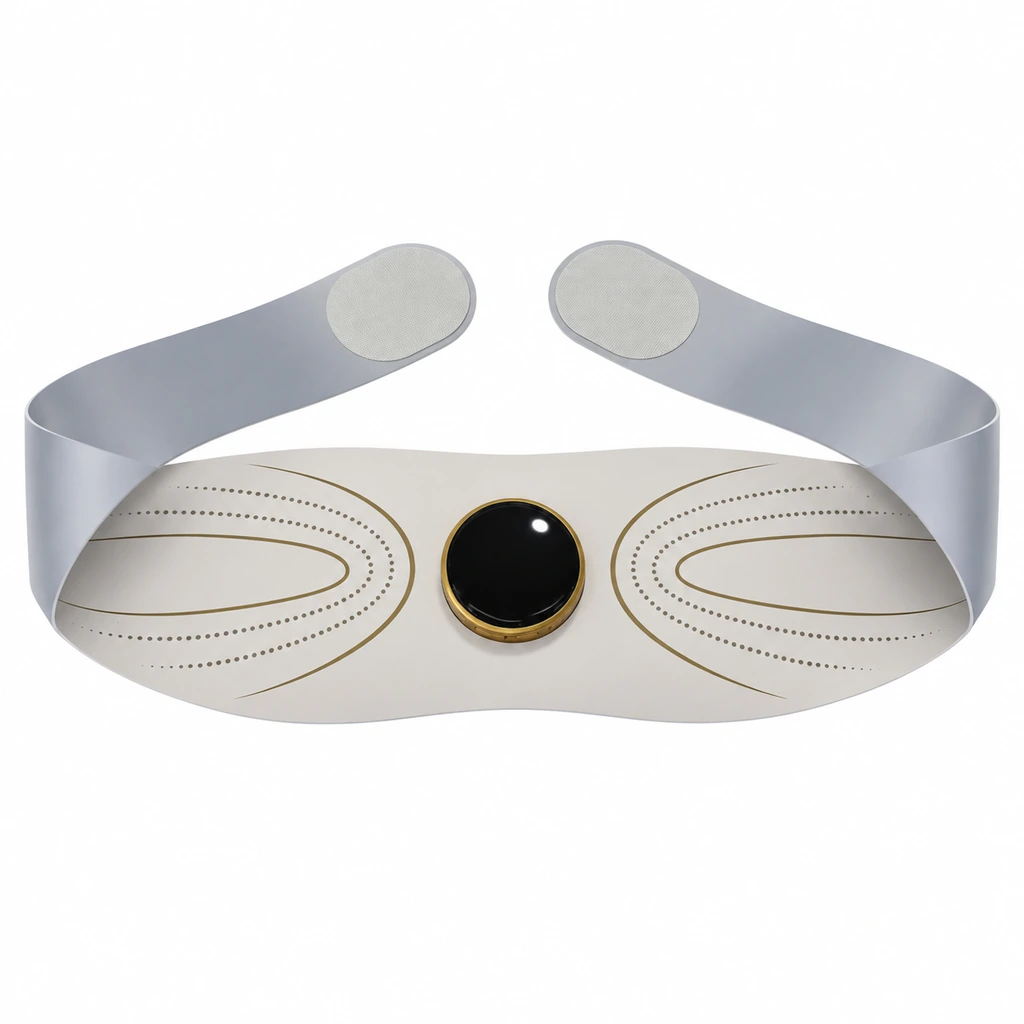
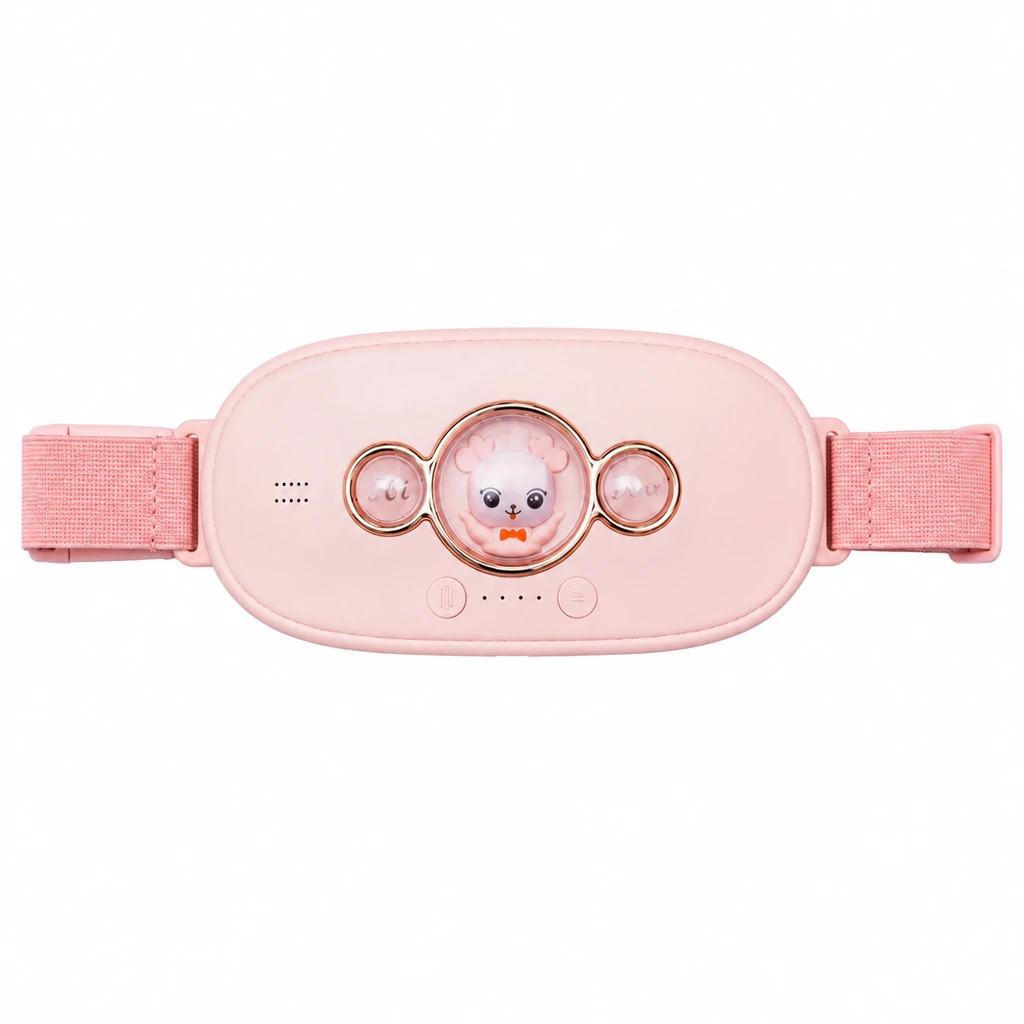
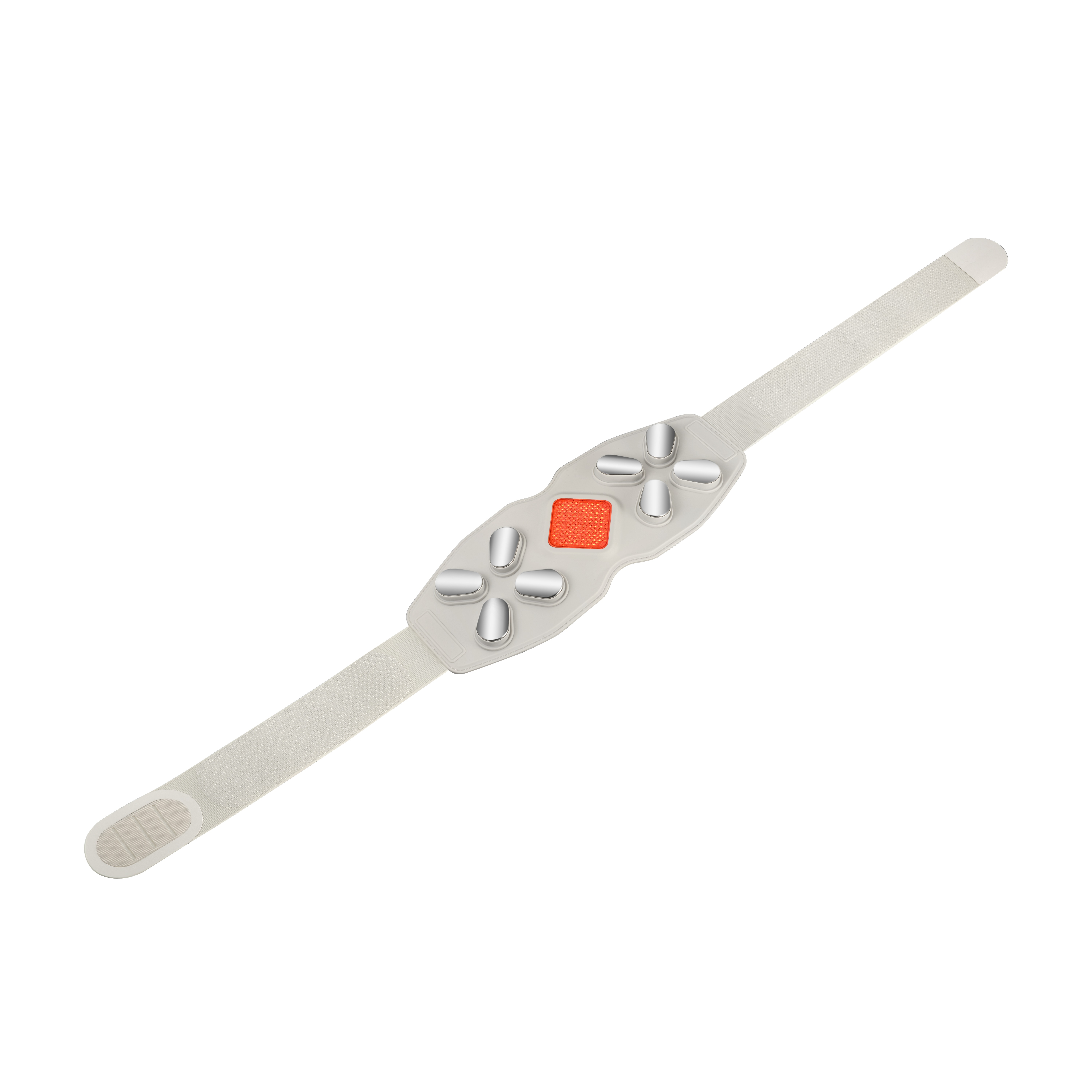
The Meilan A1 waist massager has a listed overall size of 1100 × 136 × 35 mm. This is an overall product dimension, not a published minimum-to-maximum waist circumference. Do not turn 1100 mm into a fit claim. For the Meilan A9 waist massager, request its own dimensional drawing and fastening range before placing its measurements beside A1's.
3. Measure the belt in a repeatable sequence
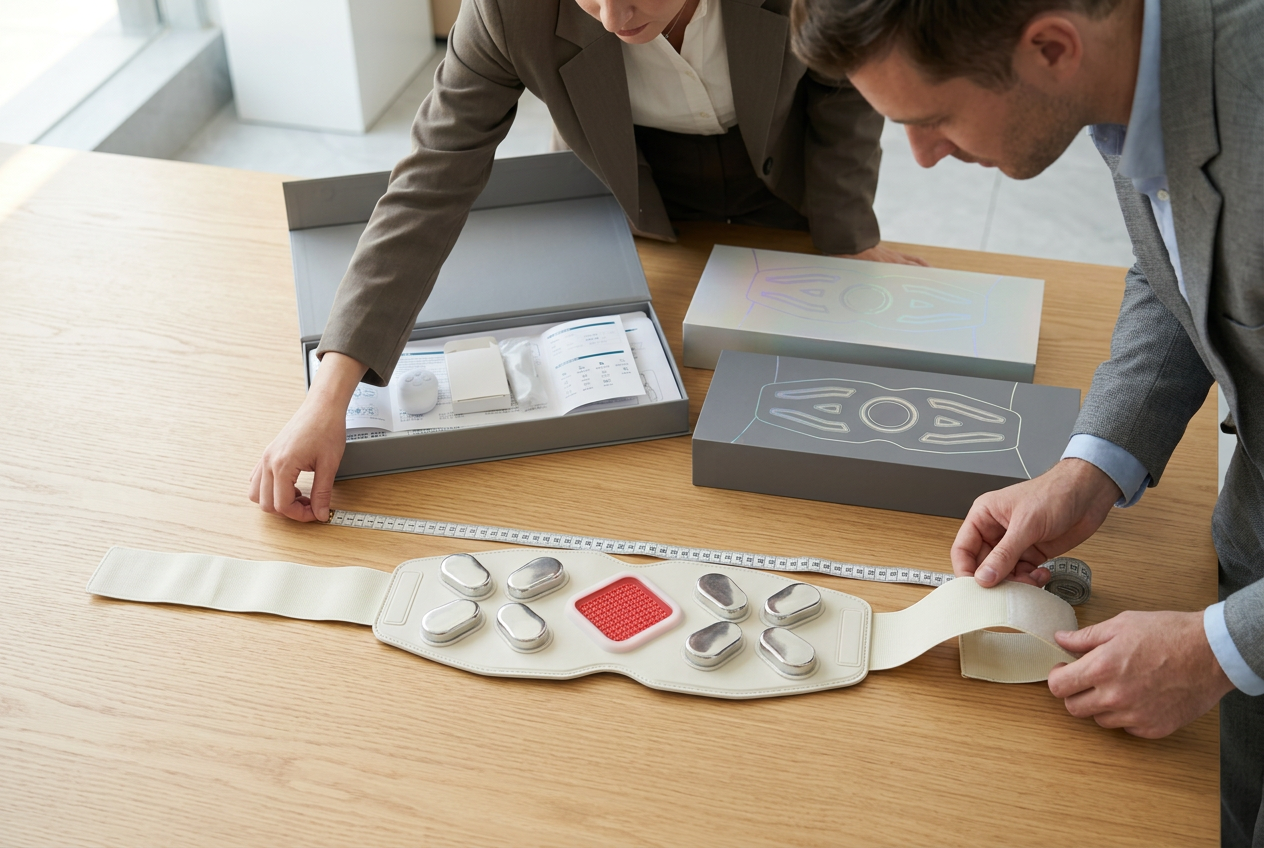
Lay the unpowered sample flat without pulling the elastic. Record the total length and the central panel's width and height. Then photograph both strap ends, mark the beginning and end of each usable fastening zone, and measure the available overlap. Use the same reference points for A1, A9 and any revised strap so the figures can be compared fairly.
Next, close the belt around a flexible measuring form or a consenting wearer at the intended wearing position. Record the smallest and largest circumferences at which the fastener engages as designed, the overlap remaining at each end, and whether the panel stays centered. Repeat over the clothing layer specified for the retail offer. Do not pull the belt unusually tight just to reach a larger number; record the closure tension and any slipping or curling during ordinary movement.
Use a simple photo set: opened outer side, opened contact side, close-up of both fasteners, and the belt fastened at the two measured endpoints. Put a ruler or tape in the frame and label the sample revision. This lets a product team, supplier and retail designer discuss the same belt rather than different interpretations of “adjustable.”
4. Check what the dimensions do not tell you
Two belts can have a similar flat length yet feel different in use. Observe whether the center panel follows the waist curve, whether the strap edge rolls, whether the fastening patch presses against skin or clothing, and whether the belt shifts when a wearer sits, stands and walks a short distance. Record the garment layer and the wearer's circumference for each observation. A fit note from one wearer is useful as a sample observation; it is not evidence that the belt fits every body type.
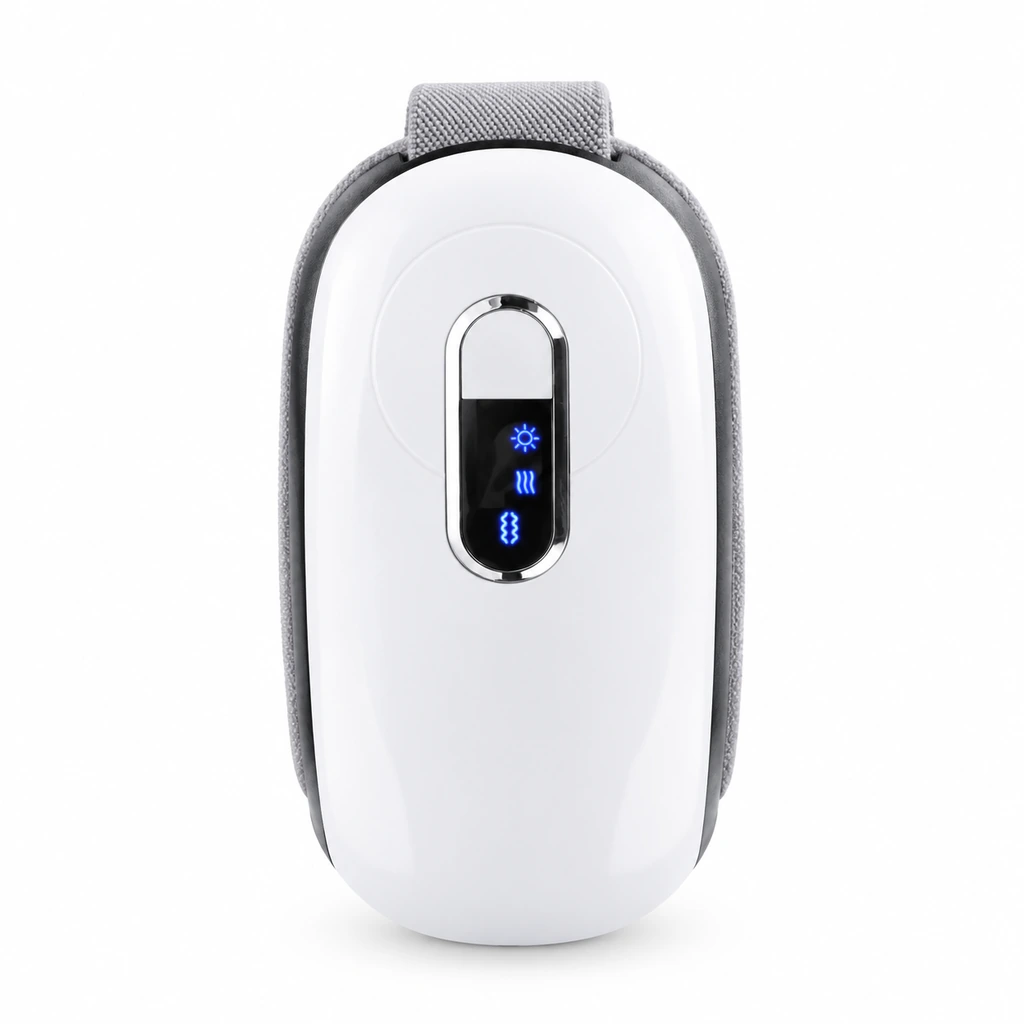
Controls are part of the fit review. Ask a tester to reach the on-device buttons or display while the belt is fastened, then follow the matching instructions to adjust or stop operation. If a remote is quoted, test that route separately and confirm whether it is in the priced pack. Check that the closure remains secure during those actions. Comfort feedback and access to controls should be logged separately from the dimensional measurements.
5. Connect fit to product pages and packaging
A retail size statement should name the measurement it represents. “Overall length,” “adjustable strap” and “supported waist circumference” are different claims. If the supplier provides only an overall dimension, display it as a product dimension and leave the wearable range out until the sample and documentation support one. Do not use “fits all” as a substitute for a measured range.
Check the artwork, manual, carton and product page against the same quoted belt. A strap revision can change the usable fastening span without changing the electronics, and a folded belt may fit the carton while its adjustment range remains unsuitable for the intended customer group. Include the approved strap, any extension piece, controller, cable and instructions in the pack-out review; quote optional items separately.
6. Ask for a version-matched fit record
For an RFQ, ask Meilan for the dimensioned drawing of the proposed A1 or A9 version, the strap material and closure layout, the stated wearing-position circumference range, and photographs of the open belt and both fastening ends. Request a sample with the same belt and accessories as the quotation. If different strap lengths or closure layouts are offered, give each a separate code and size record.
Keep the measurement sheet with the approved sample and packaging proof. On a reorder, compare the new belt's flat length, fastening-zone position and overlap with that record before reusing the original size chart. This is more useful than assuming that an unchanged model name guarantees an unchanged fit.
7. Use a sizing decision table before approving the SKU
| Buyer question | Record on the quoted sample | Decision rule |
|---|---|---|
| What is the product's physical size? | Central panel width and height; total flat length; strap width. | Use these as product dimensions, not a waist-range claim. |
| Where does the closure work? | Fastening-zone start and end; overlap at the smallest and largest tested circumferences. | State a range only when closure and panel placement remain acceptable. |
| How does it wear? | Wearing position, clothing layer, movement observations and tester measurements. | Approve the intended channel's size wording from repeatable observations. |
| Which version is being sold? | Model and belt revision; drawing, manual, carton and accessory list. | Resolve mismatches before approving artwork or a purchase order. |
Shortlist the belt whose measured fastening range and wear test match the intended customers and channel. To compare available configurations, see the Meilan waist massager collection. Send your target market, intended wearing position, required circumference range and order volume through the Meilan contact page to request A1 or A9 samples and their matching size records.
Buyer FAQ
Is a belt's overall length its maximum wearable waist size?
No. The closure needs overlap, and the central panel and strap may not form a full usable circle at the quoted flat length.
Can A1's 1100 mm dimension be used as a waist range?
No. It is an overall product dimension. A minimum and maximum wearing circumference require separate fastening and sample checks.
Should A1 and A9 share one size chart?
Only if their actual quoted belts are measured and shown to support the same stated range. Keep model and strap revisions separate by default.
What is the first sample photo to request?
Ask for the belt opened flat with a measuring tape and both fastening ends visible. Add contact-side and worn-position views for the fit review.
Does a comfortable trial prove a universal fit?
No. Record the wearer's measurement, clothing layer and observation, then test the range relevant to the planned customers.
When should a size claim be revised?
Recheck it whenever the strap, fastener, central panel or supplied extension changes, including on a reorder.

